

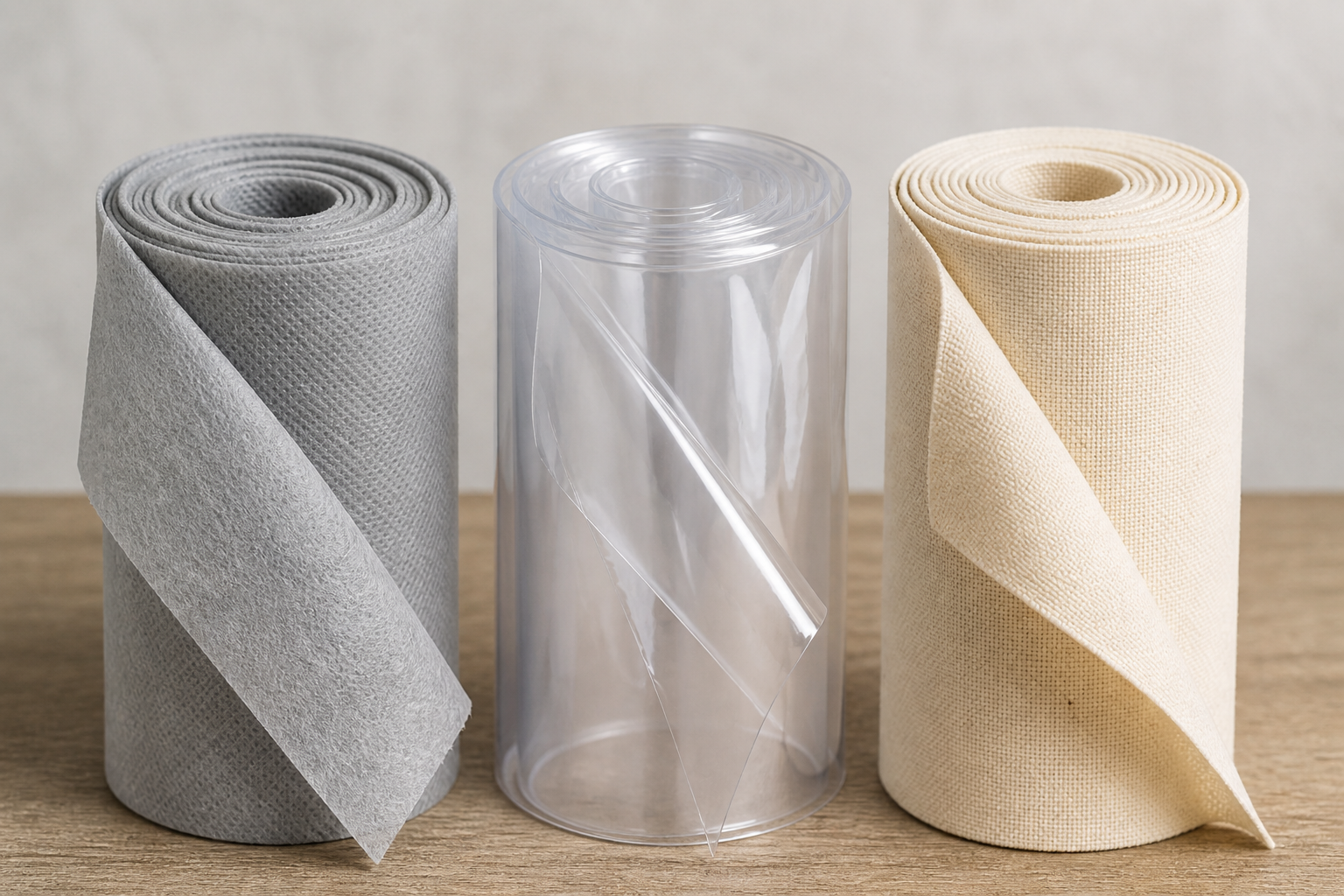
Non-Woven vs PEVA vs Cotton Suit Covers: Which Material Should You Choose?
Buyers ask us which material is best at least twice a week. There is no “best.” There is the right material for the job, and the job changes with your customer. This is the answer we give in every quote email, written down so you can forward it to your team.
The Comparison in One Table
| Non-woven | PEVA | Cotton | |
|---|---|---|---|
| Price per piece (500 pcs) | $0.3–0.8 | $0.2–0.5 | $1.5–3.5 |
| Weight | 60–100 gsm | 30–60 gsm | 120–200 gsm |
| Breathable | Yes | No | Yes |
| Waterproof | No | Yes | No |
| Printing | Silk screen, hot stamp, flexo | Limited | Embroidery, screen |
| Durability | 1–3 seasons | 1–2 years | 5+ years |
| Typical user | Dry cleaners, shops, hotels | Retail display, hotels, luggage | Tailors, brands, gift sets |
Prices vary by region and order size; these are ballpark figures from our 2025 quotes. The point is the ranking, not the exact number.
Non-Woven: The Workhorse
Spun-bond polypropylene, and it is the default for a reason. It breathes, so damp garments dry instead of molding. It takes ink well, so your logo prints sharp. And at 60–100 gsm it is cheap enough to be semi-disposable.
The gsm choice matters more than most buyers think:
- 60–70 gsm. Light and thin. Good for dry cleaners who treat covers as consumables and reorder monthly.
- 80 gsm. The sweet spot. Survives a season of shop use, still prints clean. This is what we recommend to first-time importers.
- 100 gsm. Heavy enough for covers that get handled daily, or for the body of a mid-range carry bag. It feels substantial in the hand, which matters when a customer is deciding whether to pay for the bag.
Color matters too. Black hides dust and looks serious behind a counter. White shows stains but photographs clean on e-commerce. A custom brand color makes the cover part of the product. We stock twelve standard colors and match custom ones to a swatch before production.
Printing on non-woven: silk screen is cheapest, hot stamping looks sharp on dark colors, and flexo works for big logo runs. We print one color or four. Embroidery works too, but it is heavy on non-woven — reserve it for the cotton line.
PEVA: The Display Window
PEVA is the clear material you see in hotel wardrobes and suit shops. It is a vinyl alternative without the chlorine, which is why retailers call it “eco-friendlier” than PVC. It is waterproof, glossy, and cheap.
The job: show the garment. A customer sees the suit through the cover, and the cover does the selling. Hotels love it because guests find their own garments without opening anything. That is why we ship 5,000–20,000 PEVA covers at a time to hotel groups.
The catch: PEVA does not breathe. A damp suit inside a sealed PEVA cover stays damp. Give it a week and you get that musty smell, then mold spots. We tell every buyer the same thing: PEVA for display and travel, never for storage of wet or just-cleaned garments.
One more note: low-gsm PEVA feels flimsy. If your customers handle covers daily, ask for 40 gsm or higher, and a stitched hem instead of a welded one. The difference in lifespan is months, not weeks.
Cotton: The Bespoke Option
Cotton covers are the ones you see in high-end tailor shops, gift sets, and wedding boutiques. Canvas cotton at 120–200 gsm feels expensive, because it is. The cover becomes part of the product — a tailor hands over a suit in a cotton cover with embroidered initials, and that is the whole brand moment.
Cotton takes embroidery beautifully, which is why monograms show up here. It also breathes, which makes it the safest long-term storage option for expensive wool suits. And it washes — a real advantage over non-woven, which starts to look tired after a few cleanings.
The downsides: cost, weight, and drying time. A cotton cover costs 3–5 times a non-woven one. It adds shipping weight, and if it gets wet it takes a day to dry. For most businesses, cotton is a higher-margin product line, not the everyday workhorse.
The Eco Question
Sustainability claims need receipts now. Here is what we can back up:
- RPET. Recycled polyester from bottles, GRS-certified. Costs 15–20% more than virgin non-woven. Brands with published sustainability targets order this.
- Biodegradable non-woven. PLA-based or additive-treated polypropylene that breaks down faster in landfill. Price is close to standard non-woven. A growing part of our European orders.
- OEKO-TEX Standard 100. Certifies that fabrics, dyes, and prints are free of harmful substances. We run OEKO-TEX-certified lines for baby clothing brands and any buyer who plans to sell in the EU.
- PEVA’s eco story. PEVA is chlorine-free, which is real, but it is still a plastic film. Do not let a supplier sell it as biodegradable. It is not.
One honest warning: “eco-friendly” labels are everywhere and mean nothing on their own. When we quote RPET or biodegradable material, we attach the certificate number and the test report. Ask your supplier for the same. If they hesitate, treat the claim as marketing.
The rule we give buyers: if your customer will audit the claim, get the certificate. OEKO-TEX and GRS certificates are standard paperwork for us — they come with the quote, not as an upsell.
What Each Buyer Should Pick
Suit shop. Non-woven 80 gsm with a clear PEVA front panel and your logo silk-screened on the chest. Customers see the suit, the shop gets the branding, and the cost stays under a dollar a piece.
Dry cleaner. Non-woven 60–70 gsm, no clear panel, printed with your name and care instructions. Treat them as consumables. Reorder monthly.
Hotel. PEVA with a clear front, or non-woven with a PEVA window if you want the eco story. Volume pricing kicks in past 5,000 pieces.
Brand / retailer. This is where you decide: RPET non-woven for the mass line, cotton canvas with embroidery for the higher line. Offer both and let the price point decide.
Tailor / bespoke shop. Cotton, 160 gsm or up. Add embroidered initials as a paid option. It is a margin product, not a cost center.
We should also mention blended constructions, because they answer more briefs than any single material. A non-woven body with a PEVA window. A cotton body with a non-woven lining. A PEVA cover with a non-woven hem strip so the edge never cuts the garment. Most of our production is a combination, not one fabric. The table above is the starting point; the spec sheet is where the real product gets built.
Whatever you pick, order a sample before you commit. A 7-day sample run costs a fraction of a wrong container. Send us your garment sizes and quantities, and we will confirm the suit covers spec before you sign anything.
We also make custom suit bags in the same materials, so your cover and bag lines can match — same fabric, same print, same logo placement.
Not sure which material fits your market? Get a quote and tell us what you sell. We will tell you what your customers expect, and what it costs to deliver.