


How to Choose a Suit Bag for Travel: A Buyer’s Guide
We’ve been sewing garment bags out of our factory for eleven years. The travel question comes up more than any other: which travel suit bag should a buyer stock, and which one should he pack for his own flight?
Buyers ask it for themselves, for their sales teams, for customers who fly every other week. The answer isn’t one bag. It’s a short list of decisions. Fold or hang. Length. Fabric. Zipper. Get those four right, and the rest is details.
Fold or hang — which one actually survives the flight?
Start with how you pack.
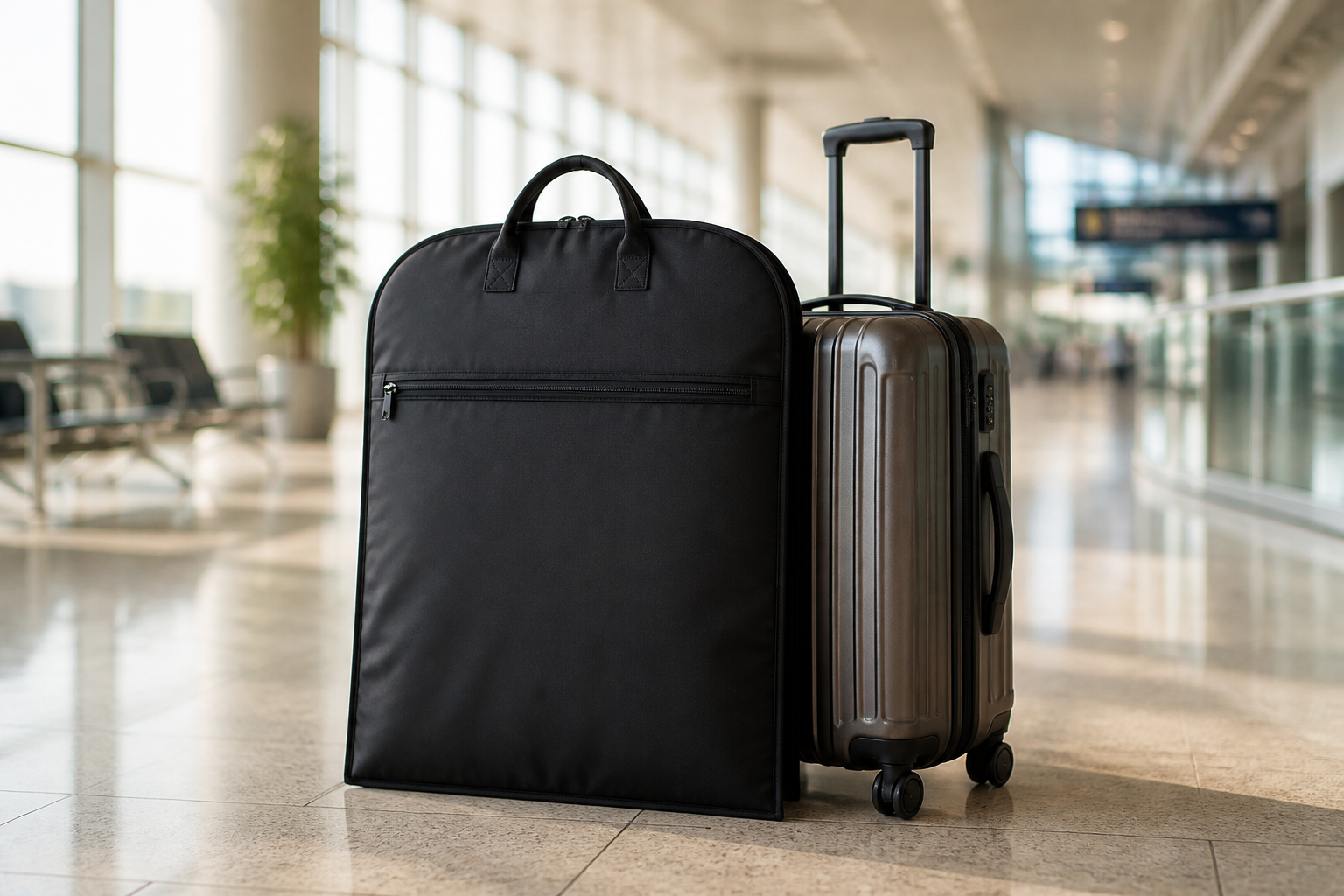
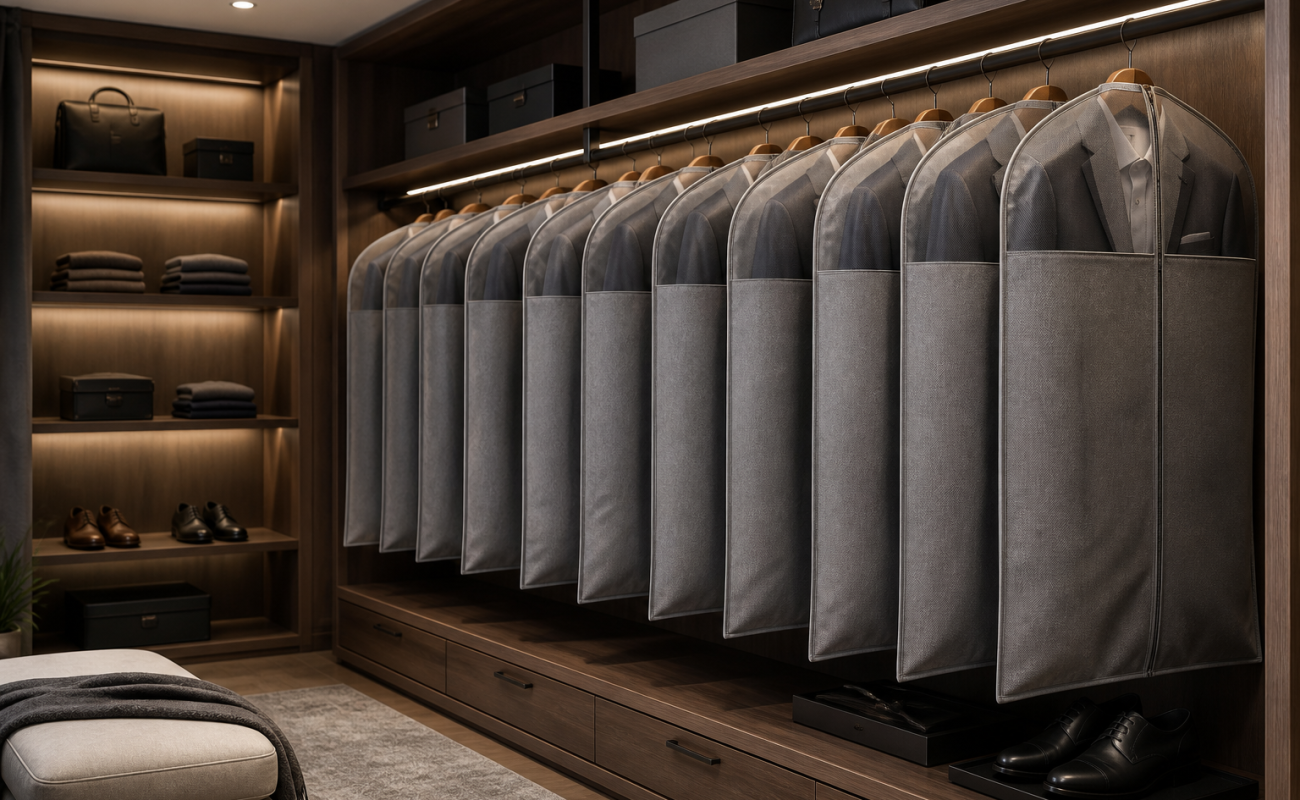
A hanging bag keeps the jacket on its hanger. You fold the bag in half over the bar of a trolley case, and the suit rides upright. Most airlines treat a folded garment bag around 114 cm as carry-on, so a 100 cm jacket bag slips through. Fold it once, and it’s 50 cm in the overhead bin.
A foldable suit bag lies flat. Three panels, soft interior, no hanger. It goes straight into a carry-on or a backpack and weighs 200 to 300 grams. You forget it’s there until you need it.
Which one for you? One-night trip, tight carry-on, standard blazer — fold it. Three-day conference, suit that has to look pressed at a 9 am meeting — hang it. Nine times out of ten, the buyer who tests both keeps the hanging bag for work trips and the folding bag for everything else.
One rule we push on every buyer: never judge a foldable bag by its folded size. A bag that folds to 30 × 40 cm but has no foam board inside will hand you a creased jacket in a city where the hotel has no iron. Pay the little extra for the board. More on that below.
Sizing: what fits a 48L blazer and what fits a floor-length gown
Length is the spec people get wrong. Not fabric. Not zipper. Length.
Here’s the range we cut, in centimeters:
| Bag length | What fits |
|---|---|
| 90 cm | Short jacket, blazer, kids’ sizes |
| 100–110 cm | Standard men’s suit jacket — the everyday pick |
| 115–125 cm | Overcoats, mid-length dresses |
| 135–140 cm | Full-length coats, formal dresses |
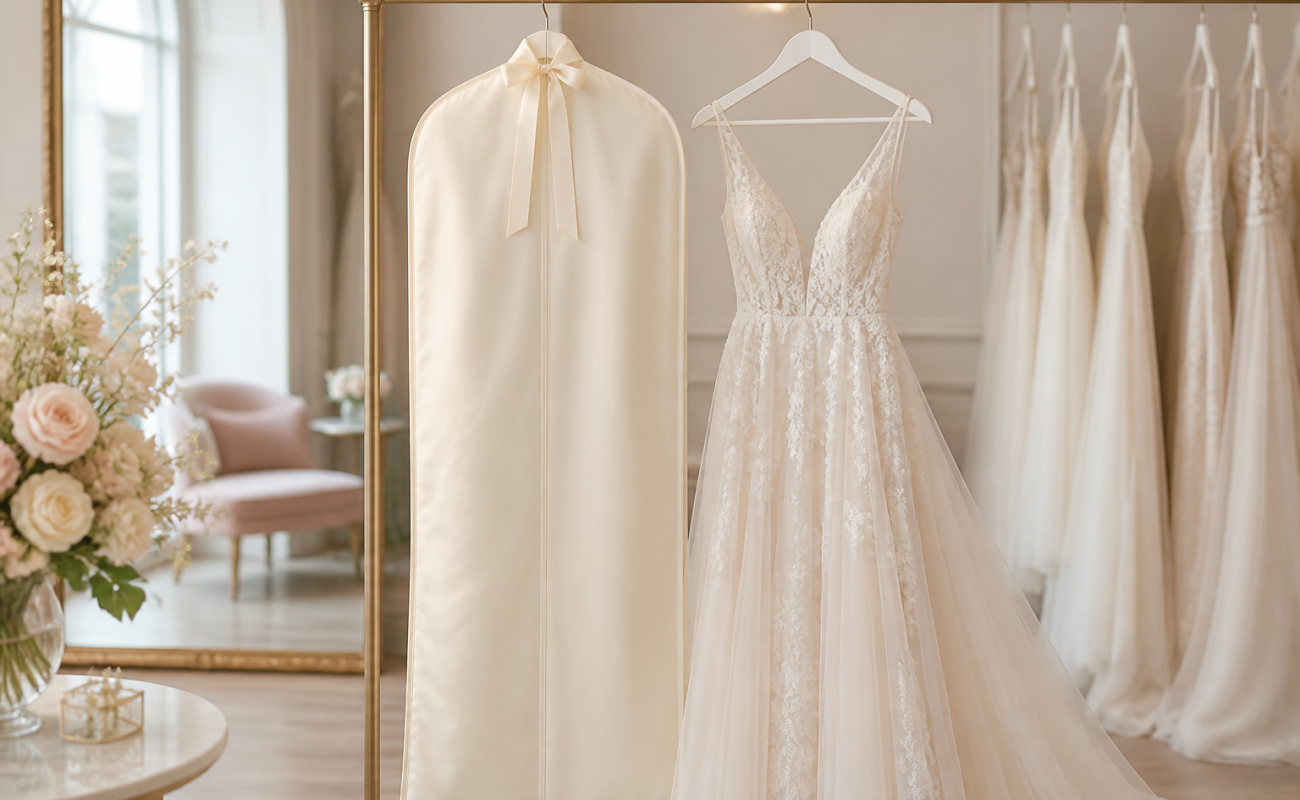
| 150–165 cm | Floor-length gowns, robes |
Most travel buyers land on 100 cm. It covers a 48L jacket with room to spare. If your staff wear long coats in winter, add a 125 cm run to the order. Hotels and dry cleaners stock 100, 125 and 140 as a set; that trio covers nearly everything a guest owns.
Material: what 80 gsm actually means on the road
The fabric decides how long the bag lasts and what it costs.
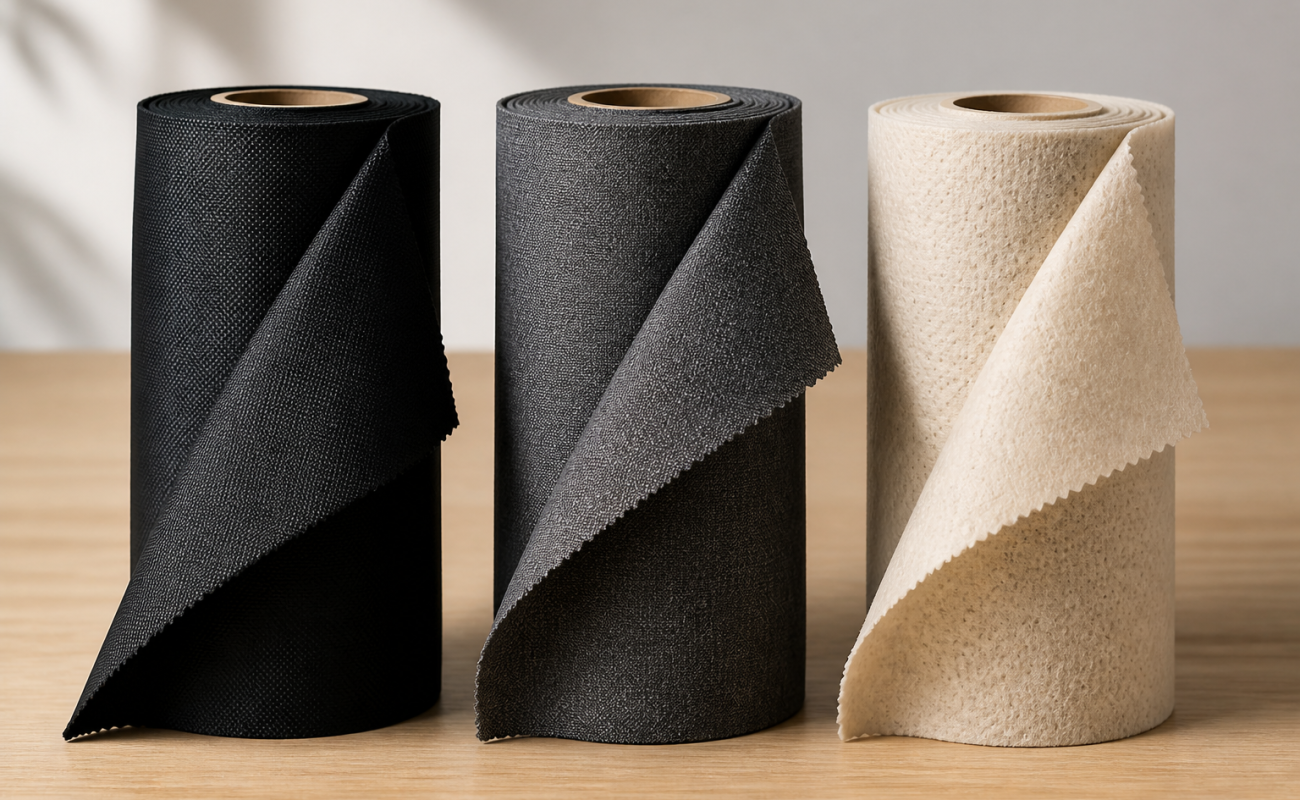
Non-woven polypropylene at 60–80 gsm is light and cheap. A 100 cm bag comes in around 200 grams. It keeps dust off and handles a few trips. It will not shrug off a rainstorm, and it won’t survive years of weekly flights. That’s fine. It’s a protection layer, not luggage.
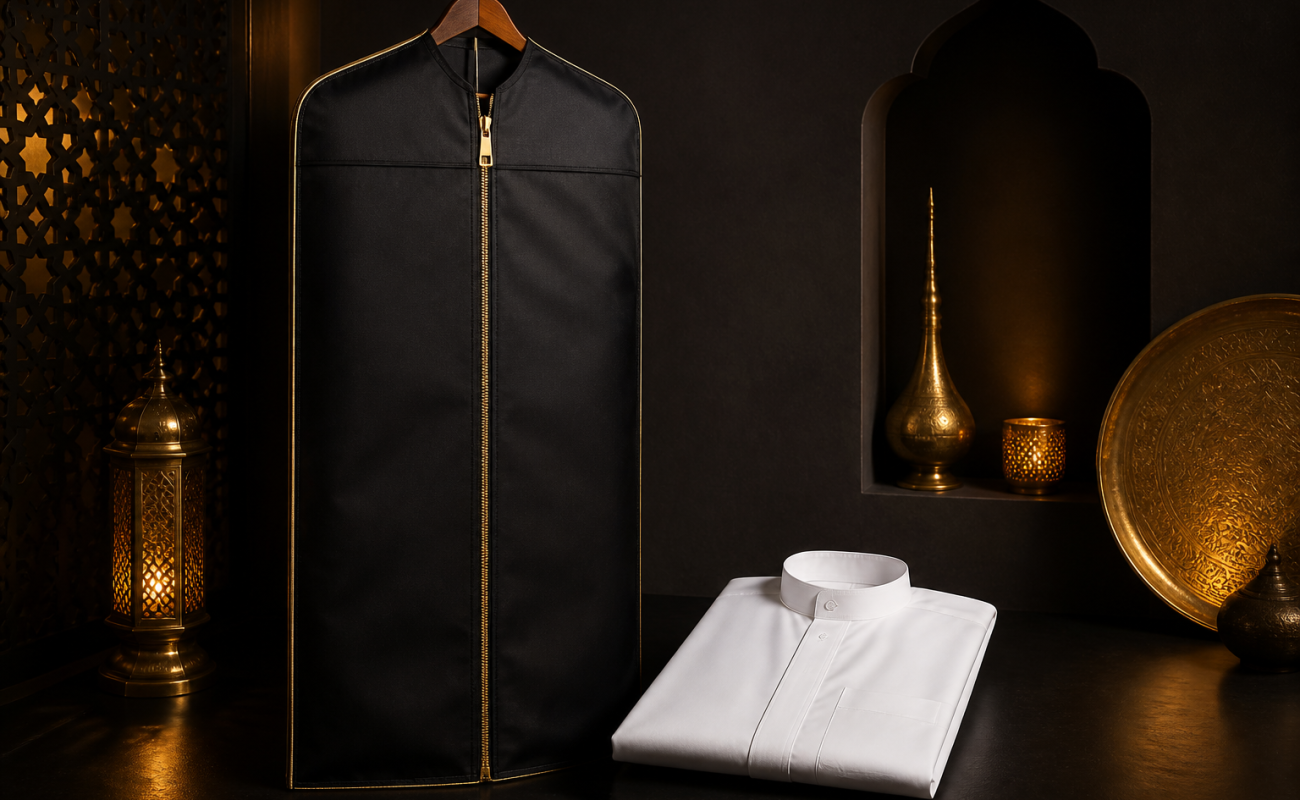
Nylon at 210D or 420D is the travel-grade answer. 210D with a PU coating shrugs off drizzle, airport carts and the bottom of an overhead bin. A 420D bag feels like it could outlive the suit. Heavier — 250 to 350 grams — and about two to three times the cost of the non-woven version.
Polyester sits in the middle and holds color under UV light. Nylon yellows in strong sun over the years. Polyester doesn’t fade nearly as fast. If the bag will sit in a shop window for six months, that matters.
One detail buyers overlook: the window. A PEVA transparent panel shows the suit without unzipping. It adds maybe 0.10–0.20 USD to the piece price. Worth it for retail. Pointless for hotel closet stock.
The wrinkle problem — what actually keeps a suit pressed
Let’s kill a myth first. The bag does not press the suit. The hanger does.
Most creases come from a wire hanger bending the shoulders. Use a wide-shoulder hanger, and make sure the bag has a real hanger slot — a reinforced opening at the top, not a hole that tears after five uses. That reinforcement is about 5 cm of extra stitching on a good bag.
Foldable bags handle wrinkles differently. The good ones carry a foam board insert, usually 3 mm EPE foam, inside the center panel. It keeps the fold line straight and predictable. Without the board, the suit creases wherever it happens to fold. With it, you know exactly where the fold sits, and you pack around it.
Ventilation matters on long trips. A fully sealed PEVA bag traps moisture, and a damp suit creases worse than a dry one. For multi-day travel, pick a bag with breathable fabric on the back panel. For dry cleaning runs, sealed PEVA is what you want — it keeps the clean suit clean on the drive home.
Zippers: the part buyers cheap out on, then regret
Every supplier will talk fabric. Few will talk zipper. That’s where the money goes.
On a 100 cm bag, you’re choosing between a #5 and an #8 zipper. A #5 coil is fine on non-woven bags — light, cheap, smooth. On nylon travel bags, go #8 with double sliders and an auto-lock pull. It handles the bend when the bag folds in half. It costs a little more, roughly 0.30–0.50 USD a bag depending on volume, and it’s the difference between a bag that lasts a year and one that lasts five.
Ask what brand the supplier uses. We quote YKK or an equivalent, and we tell buyers to test it in the sample round: open and close the bag 100 times. A broken zipper is the number-one complaint on bags with cheap hardware. It’s also the easiest to avoid.
What to check before you order 500 pieces
You don’t need a 5,000-piece gamble to test the market. Order one sample — our turnaround is 7 days — and fly with it. One trip tells you more than any spec sheet.
When you scale, here’s the math we quote: MOQ 500 pieces for custom colors and printing, bulk production 20–30 days, FOB or CIF from our port. DDP is available if you want the landed cost settled on your side. Logo placement is your call — front chest, bottom right, or full back. Non-woven takes 1–2 color screen printing; nylon takes hot stamping and embroidery without trouble.
Match the bag to your customer, not your own taste. A dry cleaner wants 60 gsm non-woven, printed, cheap enough to give away. A menswear brand selling a bag beside the suit wants nylon or RPET that flatters the product. Both are right. They’re different orders.
Get a quote before you commit to a spec you’ll regret
We cut custom suit bags for brands, hotels and retailers in 40-plus countries. Tell us how the bag will be used, and we’ll tell you what to order — even if it isn’t the most expensive option on the table.
Send your use case, target length and quantity to the customization page, and you’ll get a spec recommendation plus a price within one working day.
And if the wardrobe side matters too — say, you’re outfitting a store or a hotel — have a look at our suit covers range. Same factory, same rules, same honesty about what you actually need.
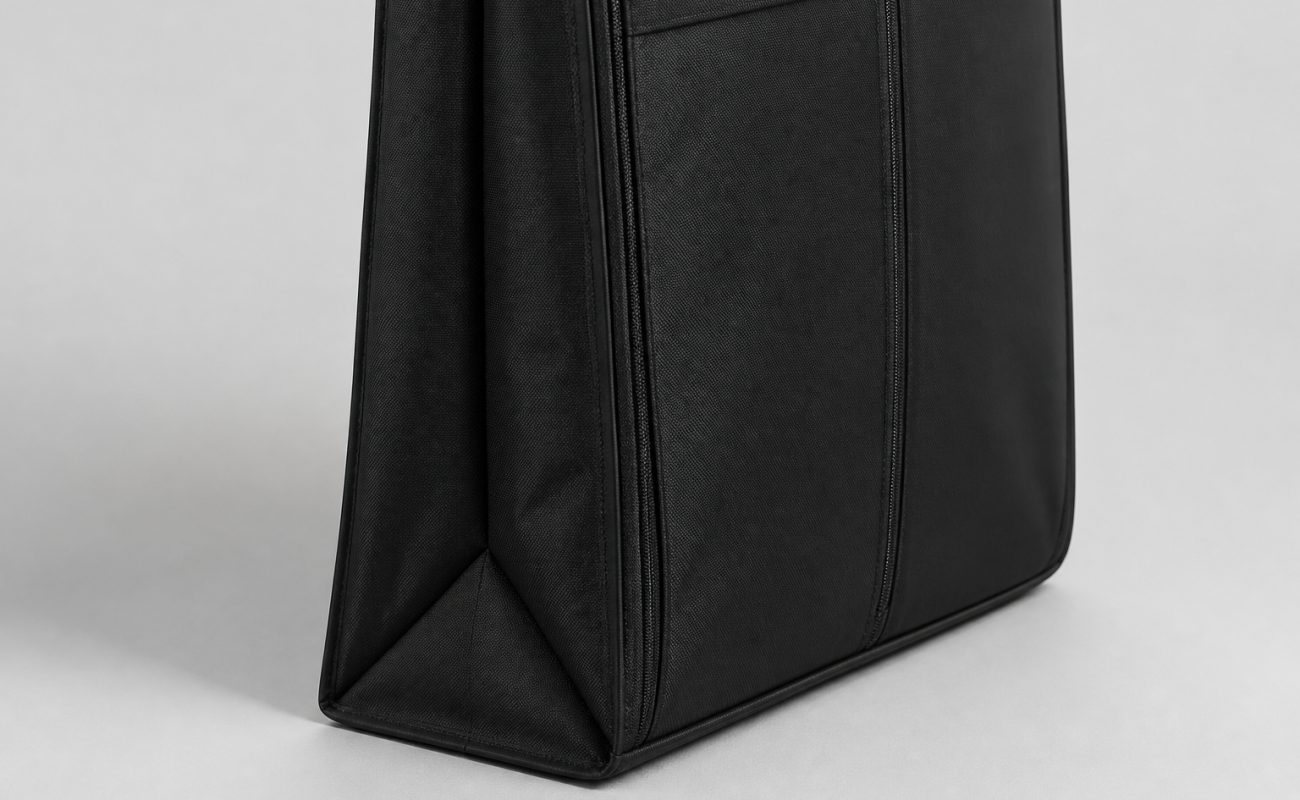
Tested the foldable bag on a two-week trip through Asia. Suits came out of the overhead bin looking pressed – the gusset does what it promises. Would like to talk about a private label run for our brand.