


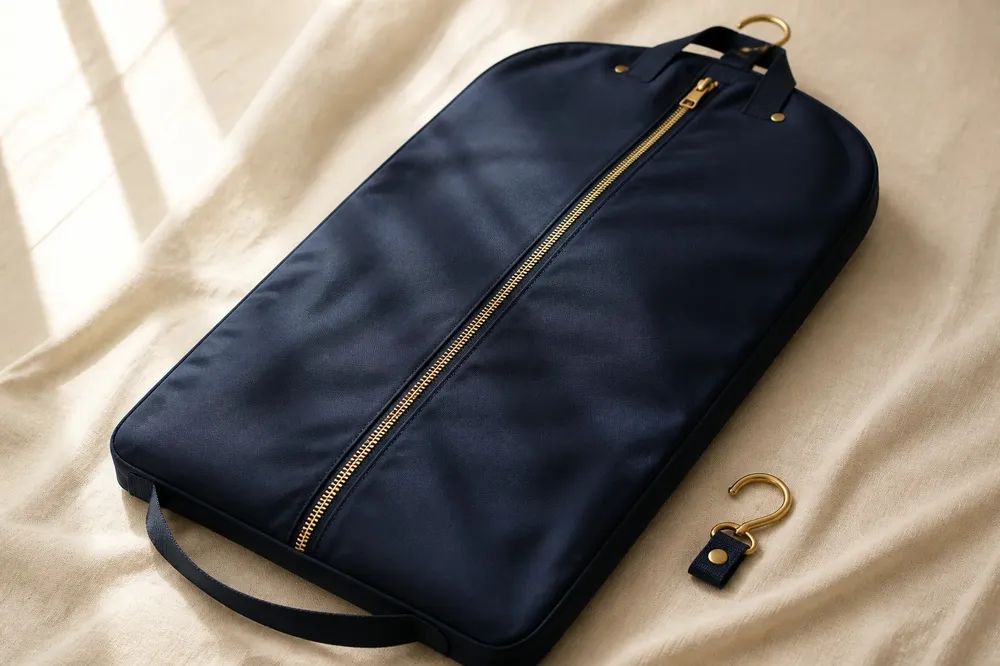
A garment bag that is too short leaves the hem of a coat exposed; one that is too long flaps and folds. Choosing the right garment bag size is the single most practical decision in protecting your inventory or your wardrobe – and it is simpler than it looks once you measure the garment, not the bag.
Match the Bag to the Garment Length
Garment bags are sized by the garments they hold. Lay the longest garment flat and measure from the collar seam to the hem, then add a little clearance for hangers and folds:
- Shirts and blouses (70-85 cm) → 90 cm bag
- Regular suits (95-105 cm) → 100 cm bag
- Long coats and overcoats (120-135 cm) → 130 cm bag
- Wedding dresses and gowns (140-160 cm) → 150 cm + custom
When in doubt, size up: a slightly longer bag never damages a garment, while a short one always does.
Structure Matters as Much as Length
Length is only half the decision. Three structural details decide how well a bag protects:
- Gussets add depth so structured shoulders and jackets are not crushed.
- Zipper placement – a full side or front zip makes packing and retrieval easier.
- Windows let retail staff and customers see the garment (or your label) without opening the bag.
Match Material to the Journey
Cotton breathes and looks premium on a tailor’s rail; polyester shrugs off travel; non-woven keeps costs low at scale; PEVA offers clear, water-resistant protection for dry cleaning and hotel closets. Choose by where the bag will live, not just how it looks.
Custom Sizes from Stolora
If your garments do not fit a standard length – trains, maxi dresses, uniform lines – we cut bags to your exact measurements. Send us your garment lengths and we will spec the bag. See the full range on our custom garment bags page and the size guide, or start a bespoke order for made-to-measure protection.