


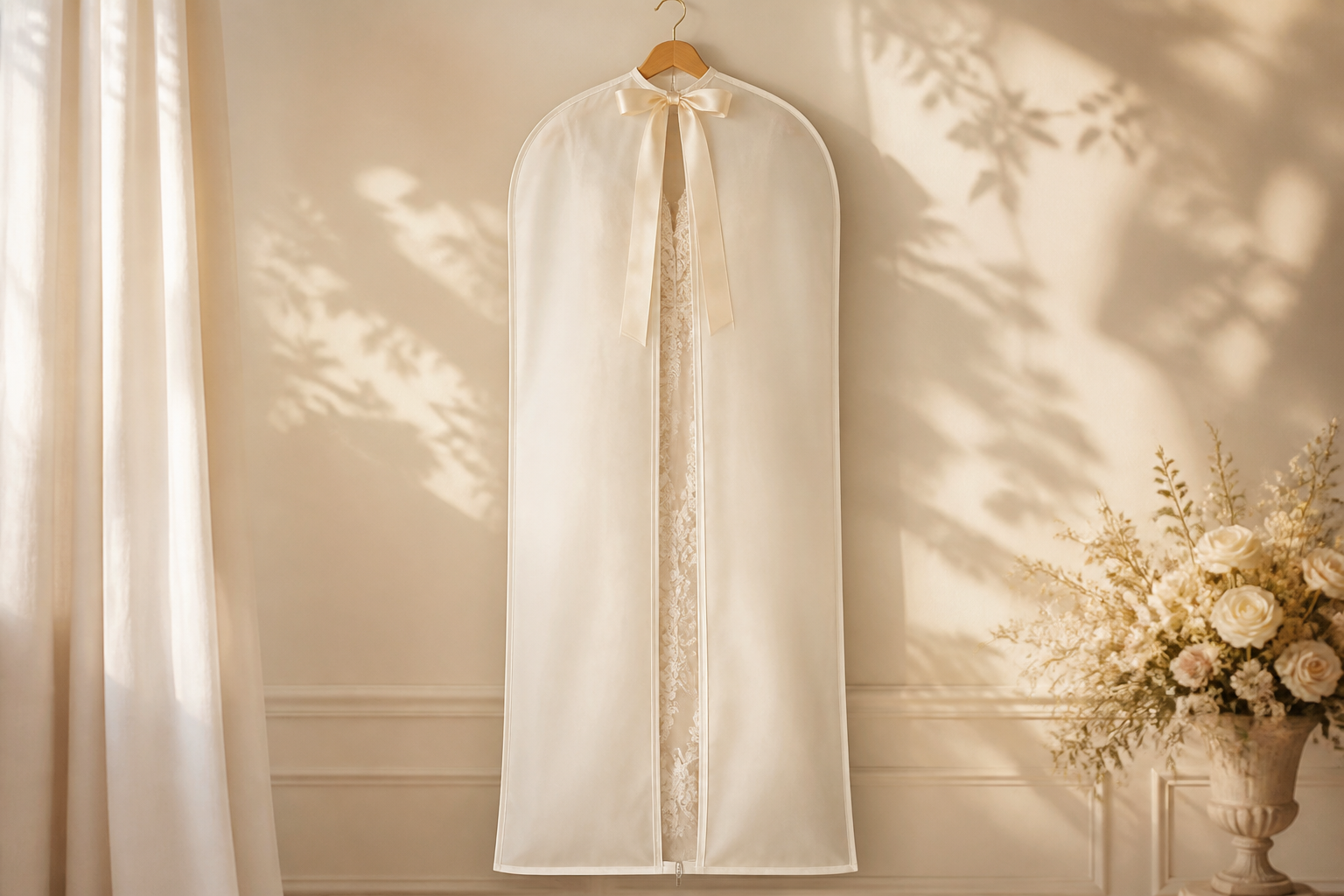
Wedding Garment Bags: What Bridal Shops Need to Know
Every bridal shop we work with learns the same lesson sooner or later: the dress is not the product. The dress plus how it arrives, how it’s stored, and how it’s handed over — that’s the product.
We’ve supplied wedding garment covers to boutiques in the US, UK, and the Gulf for years. The questions are always the same, and the answers don’t change much. Here’s what we tell brides, shop owners, and buyers when they ask about wedding garment bags.
The Length Problem: Wedding Dresses Are Not Suits
A standard suit cover is 100 cm. A wedding dress — with a train, or a full skirt, or a cathedral veil attached — runs 140 to 160 cm, sometimes more. Put a wedding dress in a standard cover and the bottom six inches of the skirt hang out, collecting dust and getting stepped on.
This is the single biggest mistake we see from new bridal buyers. They order “garment bags” without specifying length, get 100 cm covers, and find out the hard way.
Order 150–160 cm covers for wedding dresses, and don’t be afraid to go custom. We cut covers up to 180 cm for trains. If you’re not sure, measure the longest gown you have in stock, add 10 cm for the hook and hanger, and that’s your length.
Fabric Choice: What Actually Protects a Wedding Dress
Wedding dresses sit in storage for weeks or months between the fitting and the wedding. That changes the fabric requirements compared to a suit bag:
- Non-woven (80–100 gsm): our default recommendation for bridal. Breathable, so moisture doesn’t trap against the fabric, soft enough not to mark beading or lace, and printable for your shop’s logo.
- Cotton canvas: the premium option. Heavier, more expensive, feels like quality in the customer’s hands. Good for high-end boutiques that hand the dress over with the cover included.
- PEVA / plastic: fine for a week of storage, wrong for months. It traps humidity, and it can mark delicate fabrics. We’d steer most bridal customers away from it unless the dress is being moved, not stored.
One more bridal-specific point: zippers. A #3 zipper is fine for a suit cover. Wedding covers get handled by customers, mothers-of-the-bride, and shop staff with pins in their hands. We use #5 zippers on bridal covers, and we tell every buyer the same thing — the zipper is what fails, so don’t save money there.
The Monogram and Branding Question
Bridal shops order wedding covers for three reasons, and branding is two of them:
- Store branding: your logo on every cover that leaves the shop. It’s the last thing the bride sees and the first thing she shows her mother.
- Personalization: names, dates, monograms embroidered on the cover. A $15 cover with the couple’s names on it stops being a cost and becomes a keepsake.
- Protection: the actual job the bag does.
We embroider monograms and dates on cotton covers, and screen print or foil stamp on non-woven. For wedding season we recommend ordering 4–6 weeks out — embroidery adds a few days to production, and you don’t want to be the shop telling a bride her cover is late.
If you’re a shop ordering covers to sell or include, buy in rounds of 50–100 and keep your own stock. Brides don’t order three months ahead anymore — half of them walk in with their wedding in four weeks.
What Bridal Shops Order from Us, in Practice
Here’s the actual pattern across our bridal customers:
- Coverage: 60% order non-woven with screen-printed store logos; 25% order cotton canvas with embroidered monograms; the rest mix.
- Quantity: boutiques order 50–150 per season, chains 500–2,000.
- Sizes: 150 cm is the most common; 160–180 cm for gowns with trains.
- Extras: ribbon ties at the neck, gift-ready packaging, tissue and branded boxes for handover.
The shops that sell covers to brides as an add-on at fitting — rather than giving them away — tell us the cover becomes a profit item and a marketing tool in one. That’s the model we’d suggest if you’re not doing it already.
How the Wedding Timeline Should Work
Wedding season planning is a real thing. Here’s the timing we recommend:
- 4–6 months out: order samples and lock your design (logo placement, size range, monogram option).
- 3 months out: place the production order. Non-woven runs 20–30 days; cotton canvas a little longer.
- 6 weeks out: receive and check the batch. Reorder now if you’re low — not in May.
- Peak season: keep 100+ in stock of your bestseller size. You will sell them.
We keep a basic range of suit covers in stock for quick reorders, but wedding-specific lengths and monograms are made to order — that’s why the timeline above exists.
What We’d Tell a Bridal Shop Buying Its First 100 Covers
Start with non-woven at 150 cm, your logo screen printed on the front, a #5 zipper, and a ribbon tie at the neck. Order 100, test them with your next 10 brides, and get feedback on the handover experience — not just the cover. Then decide whether to move up to cotton canvas with monograms for your premium tier.
That’s the honest path. The covers are the easy part — the delivery experience is where the loyalty comes from.
Need covers before your season? Send us your gown lengths and your logo, and we’ll quote you within 24 hours. We make custom suit covers from 500 pieces, samples in about 7 days, bulk production 20–30 days, shipped FOB, CIF or DDP worldwide.
Get a quote — and mention wedding, so we spec the right length the first time.
The Budget Question: How Much Should a Wedding Cover Cost?
Brides ask, shops ask, and buyers ask — so let’s put numbers on it. These are the price points we see across our programs:
- Non-woven 150 cm with screen-printed logo: the volume workhorse. Cost per unit drops sharply as quantities rise — the 500-piece price is typically 30–40% below the 100-piece price.
- Cotton canvas with embroidered monogram: two to three times the non-woven price, justified by hand-feel and the keepsake factor.
- PEVA clear covers: cheapest per unit, but as we said — wrong for long-term dress storage. We’d only recommend it for quick transport between shop and venue.
The real money question isn’t the cover itself. It’s whether the cover gets included in the price of the dress or sold as an add-on. Shops that sell monogrammed covers at fitting tell us they recover the cost within the first season and the covers keep selling themselves through word of mouth.
A Checklist for Ordering Wedding Covers
Use this before you confirm an order with any supplier:
- [ ] Cover length matches your longest gown plus 10 cm — not your average gown
- [ ] Zipper is #5, not #3 — test it on a loaded gown
- [ ] Fabric is breathable (non-woven or cotton) for storage, not sealed plastic
- [ ] Logo and monogram artwork approved in digital mockup before production
- [ ] Sample ordered and checked against a real gown before the bulk run
- [ ] Delivery timeline includes 7–10 days of buffer before your season starts
- [ ] You know the reorder lead time for peak-season restocks
Seven items, and the first one trips up more buyers than any other. Measure the longest gown.
How We Handle Wedding Season Rush
Every supplier in this trade says the same thing in March: “we’re fully booked for May.” We run a slightly different model. We keep basic suit covers in stock year-round, and we hold production capacity for bridal programs with confirmed orders — but we can’t hold it for quotes. The shops that lock their orders early get their delivery windows; the ones who wait until April are gambling.
That’s not a sales pitch. That’s how the calendar works in a factory that also runs hotel and dry-cleaning programs through the same machines.
The Final Word
Wedding garment bags are not a commodity line to us. They’re the product that sits between a shop’s most expensive item and the customer’s hands — and that moment is worth getting right.
Send us your longest gown measurement and your logo. We’ll quote covers that fit the actual dress, with the zipper and fabric we’d put on our own mother’s wedding gown.
Get a quote — we reply within 24 hours, and we’ll ask the right questions before we quote.