

Suit Bag Materials Explained: Nylon, Polyester & Non-Woven
Fabric is the first thing buyers ask us about. Price is usually the second. The two are the same question, really. Pick the right suit bag material for your business, and the price sorts itself out.
We cut garment bags in four materials: nylon, polyester, non-woven polypropylene, and recycled polyester (RPET). Here’s the honest breakdown, the way we’d give it over the phone.
Nylon: what you’re paying for at 210D and 420D
Nylon is polyamide. It’s the toughest of the four, and it’s priced like it.
The numbers you’ll see are denier: 210D, 420D, 840D. Denier is thread thickness. 210D is the standard for travel suit bags. 420D is the frequent-flyer grade, built for weekly use, checked luggage and hotel valet racks. 840D exists, but you rarely need it for a garment bag — that’s truck-tarp territory.
Check the coating while you’re at it. A PU coat around 0.15 mm does the job for a garment bag. Thicker coats crack at the fold line, where the bag doubles over every time you pack it.
What nylon does well: abrasion resistance, first. Drag a nylon bag along a carousel floor and it shrugs it off. With a PU coating, it also sheds water. A 210D coated bag handles a rainy walk from taxi to check-in without letting the suit feel it.
What nylon does badly: it absorbs water when uncoated, and it yellows under years of strong UV light. Coated 420D bags weigh more — expect 300 to 350 grams for a 100 cm bag — and cost two to three times a polyester bag, four to six times non-woven.
That extra cost buys lifespan. A good nylon bag outlives two suits. For a menswear brand or a frequent traveler, the math works.
Polyester: the middle ground most programs settle on
Polyester is nylon’s cheaper cousin with a better tan. It comes in the same deniers — 210D, 300D, 600D — and 300D is the sweet spot for garment bags.
Two things push buyers toward polyester. Color and cost. Polyester holds dye well and resists UV fading, so a navy bag stays navy after a year in a shop window. And it runs meaningfully cheaper than nylon at the same denier.
For hotel programs with a three-to-five-year lifecycle, polyester is the default answer. It takes screen printing, hot stamping and embroidery cleanly. It can be PU coated for water resistance, though most hotel bags skip that.
Wash it by hand, hang it dry, and a 300D polyester bag still looks presentable after years of guest-room use. That’s why you’ll see it in valet departments more than anywhere else.
Non-woven: why dry cleaners and hotel closets run on it
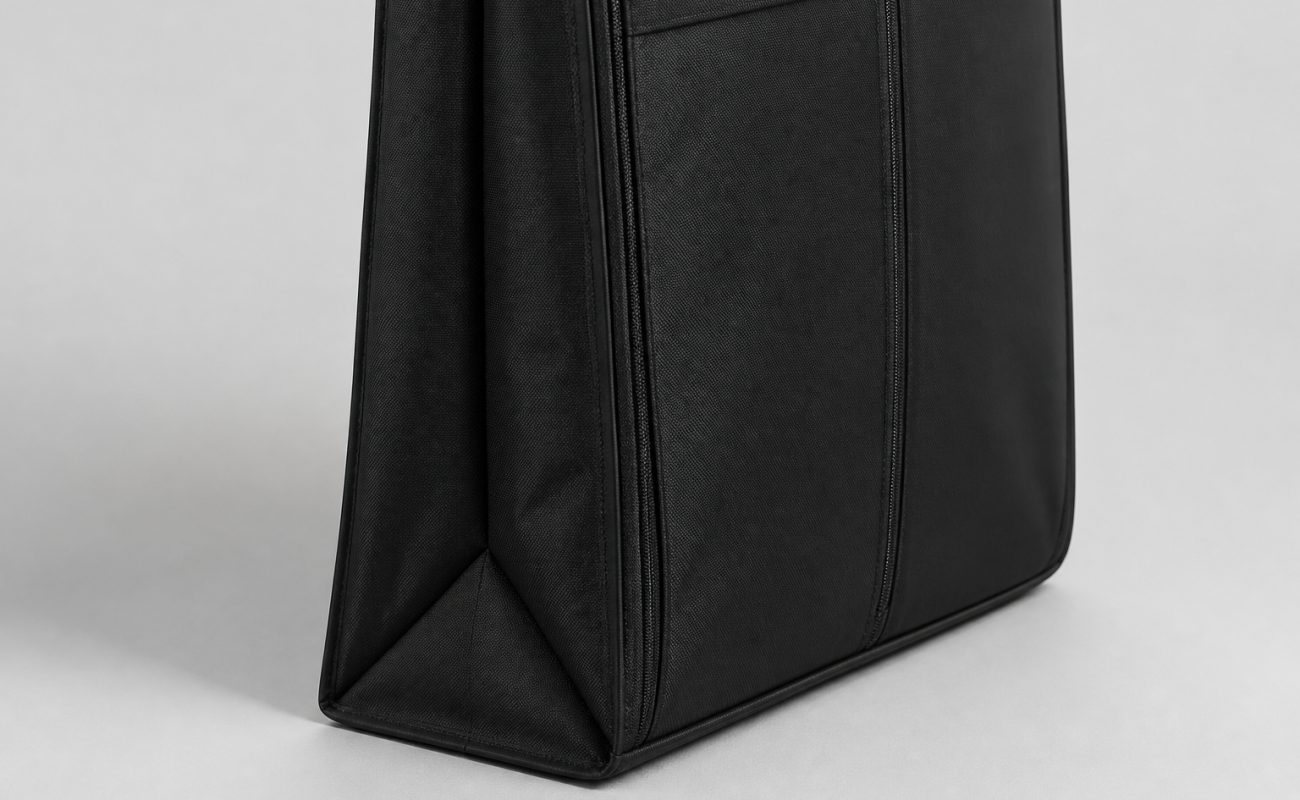
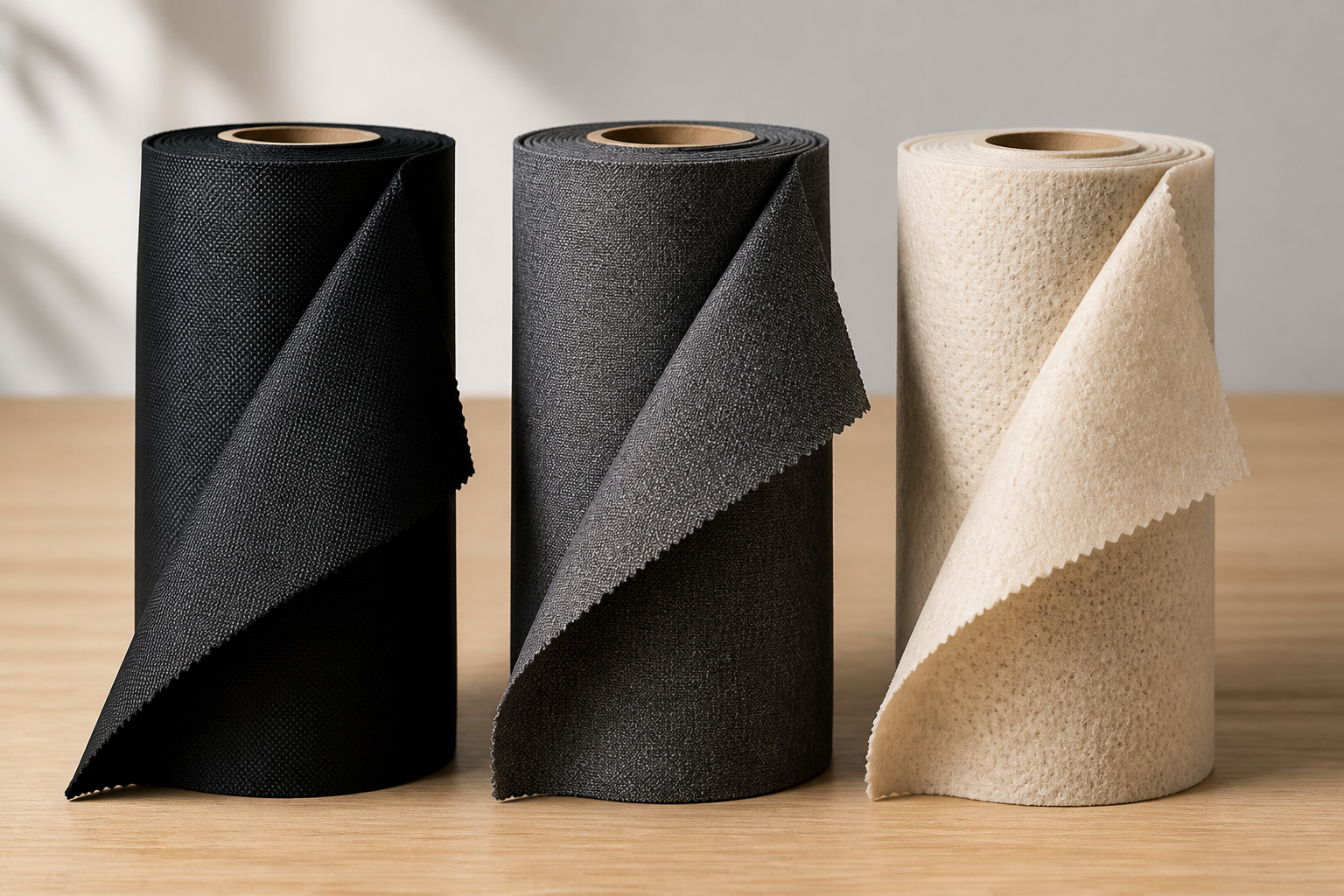
Non-woven is different from the others because it isn’t a woven fabric at all. It’s spunbond polypropylene — polypropylene fibers bonded into a sheet. The spec is grams per square meter: 60, 70, 80, 100 gsm.
The non-woven suit bag is the workhorse of the industry. Dry cleaners give them away with every suit. Hotels hang them in every wardrobe. The reasons are the same: cheap, printable, light.
A 100 cm, 80 gsm non-woven bag weighs about 200 grams and costs a fraction of a woven bag. It’s water resistant — a spilled drink rolls off — but not waterproof. Soak it and it’s done. That’s fine, because its job is short: protect the suit on the way home from the cleaner, keep dust off in the closet, carry a logo to the customer’s house.
Print quality is where non-woven shines. One or two colors, screen printed, looks sharp from across the room. Lifespan is months, not years, and that’s the point. It’s a shield, not luggage.
RPET: recycled polyester that isn’t just a marketing line
RPET is polyester made from recycled PET bottles. The bottles are cleaned, shredded, melted and respun into fiber. With GRS certification, the recycled content is verified by a third party — not just claimed on a hang tag.
The bottle math is easy to explain to a customer: a typical 100 cm bag carries the fiber of roughly 12 to 15 PET bottles. That’s a number you can print on the hang tag.
Here’s the part buyers don’t expect: performance is identical to virgin polyester. Same deniers, same print quality, same lifespan. The premium is roughly 10 to 20 percent, and it’s shrinking every year as more spinners switch to recycled feedstock.
Who orders it? Hotels with ESG targets. Menswear brands that put a sustainability claim on the box. A 100 percent rPET bag with an OEKO-TEX certified print covers both the environmental story and the skin-safety story in one SKU. OEKO-TEX matters more than people think — it certifies that dyes and prints are safe for direct skin contact, which is exactly what a bag pressed against a suit is.
How the four stack up
| Material | Common specs | 100 cm bag weight | Water resistance | Rough cost | Lifespan | Best fit |
|---|---|---|---|---|---|---|
| Nylon | 210D–420D | 250–350 g | High with PU coat | Highest | 5+ years | Travel, frequent use |
| Polyester | 210D–600D | 230–320 g | Medium | Mid | 3–5 years | Hotel programs, retail |
| Non-woven | 60–100 gsm | 180–220 g | Low | Lowest | Months | Dry cleaning, hotel closets |
| RPET | Same as polyester | Same as polyester | Medium | +10–20% | 3–5 years | Eco brands, ESG hotels |
Costs are rough ranges for a 100 cm bag at factory level. Volume moves them more than any other single factor.
One note on samples: when you’re comparing materials, order the same length in all four and weigh them on a kitchen scale. The numbers in the table come from our scale, and it’s the fastest way to sanity-check a supplier’s story.
Which material belongs in your catalog?
Use the buyer, not the spec sheet, to decide.
Dry cleaner or laundry service? Non-woven, 60–80 gsm, printed with your name, handed out with every order. Cheap enough to give away, branded enough to be remembered.
Menswear brand? Nylon for the flagship travel piece, RPET if your line carries a sustainability claim. Your customers will fold these bags and keep them.
Hotel? Non-woven for closet stock, polyester for valet and suites. Split the order and you get the right price at every touchpoint.
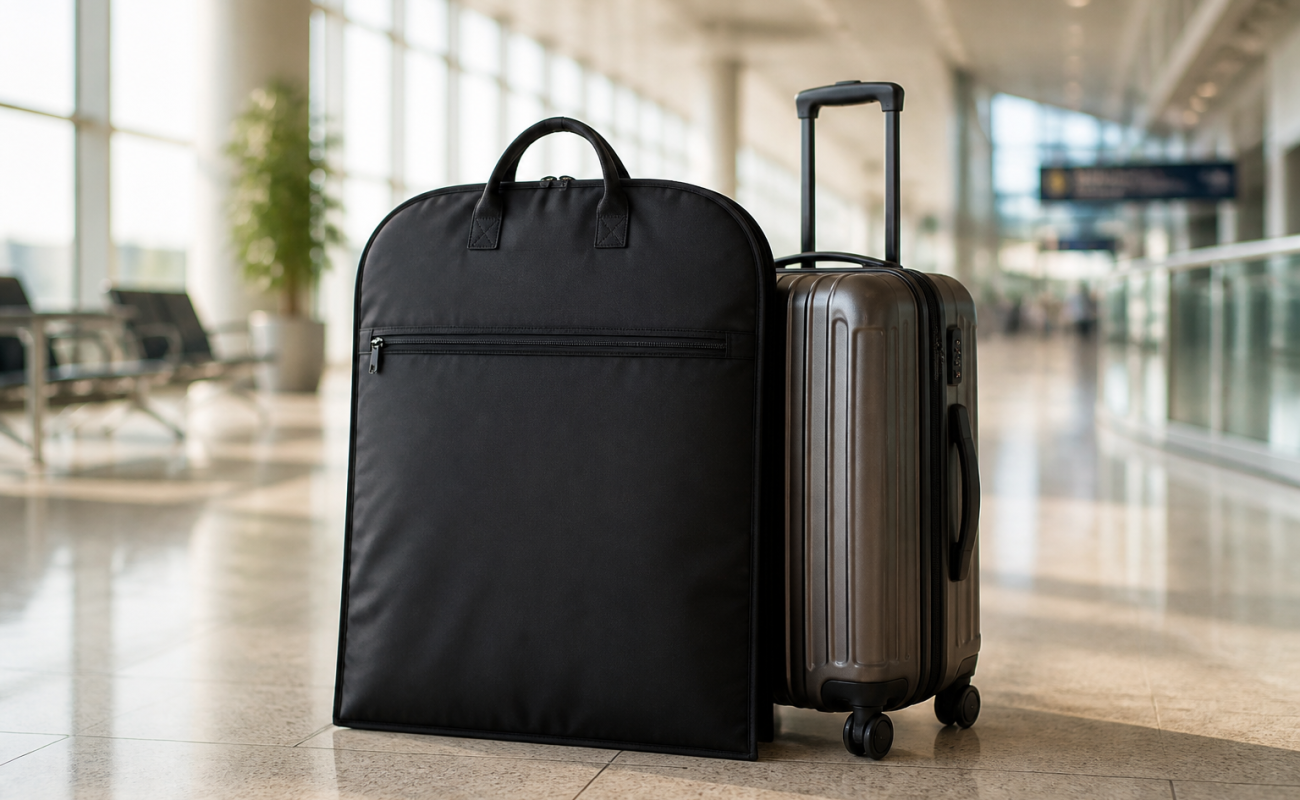
Travel accessory brand? Coated 420D nylon, #8 zippers, reinforced hanger slot. Your customer will fly with it weekly, and your warranty will thank you.
The rule of thumb we use with buyers: the bag should cost a small fraction of the suit, but not so little that it embarrasses the product. A 1,200-dollar suit in a 30-cent bag is a missed opportunity. A 30-cent bag on a 50-dollar jacket is exactly right.
Get a quote on the right material for your market
Tell us who your customer is — dry cleaner, hotel, brand, or traveler — and we’ll spec the custom suit bags around that, not around our stock. We’ll also tell you where you’re overpaying, because we’d rather earn a reorder than a one-time markup.
Send your market and quantity to the customization page for a spec sheet and a price within one working day. And if you’re also sourcing the wardrobe side — the hangers, the covers, the closet sets — our suit covers range covers that part of the order too.