

What Is a Gusseted Suit Bag and Do You Need One?
A buyer asked us last week: “What’s the difference between a gusseted bag and a normal suit bag?” Fair question. Half our catalog is one or the other, and the difference matters more than most people think.
Here’s the short version. A flat suit bag is two sheets of fabric sewn together. A gusseted bag has extra panels in the sides and bottom that unfold, so the bag opens out into a box. One fits like an envelope. The other stands up like a briefcase.
What exactly does the gusset do?
Look at the sides of a flat bag. They’re flat. Squeeze them and nothing happens.
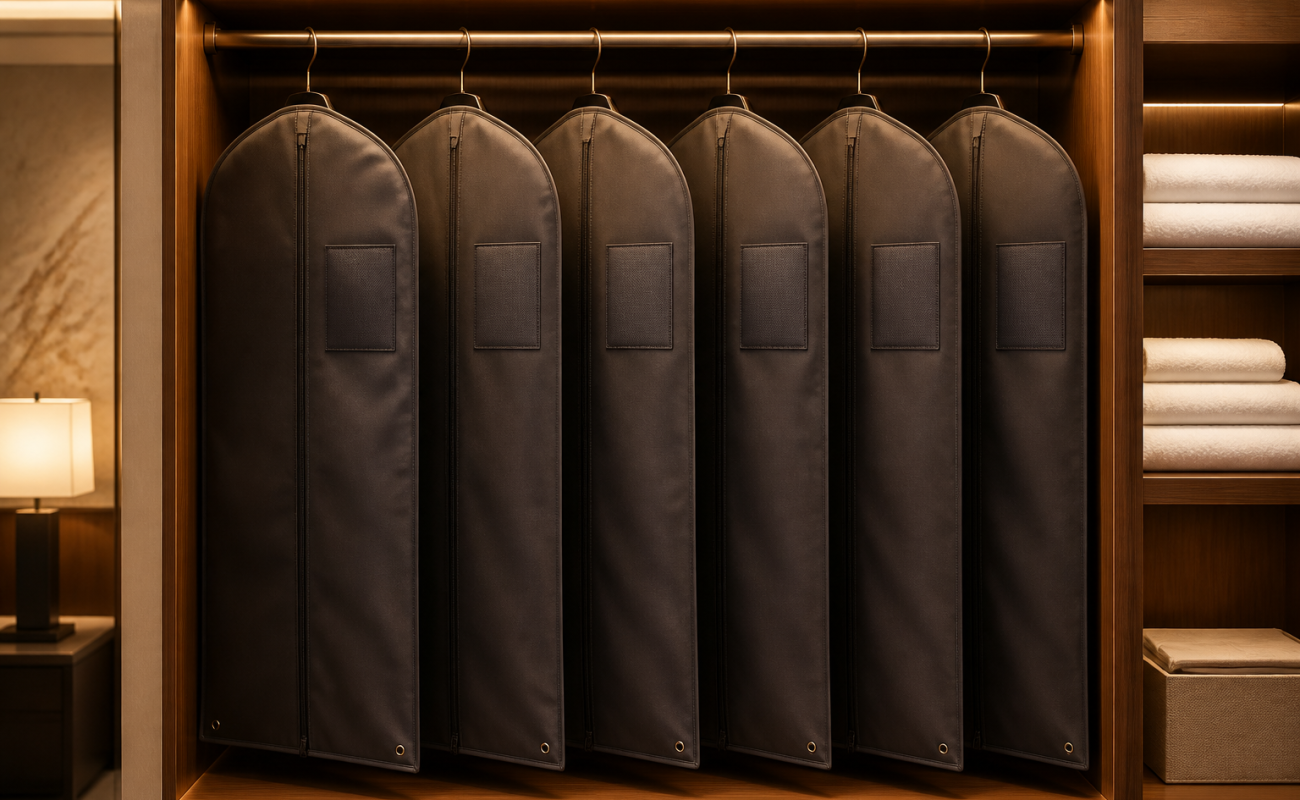
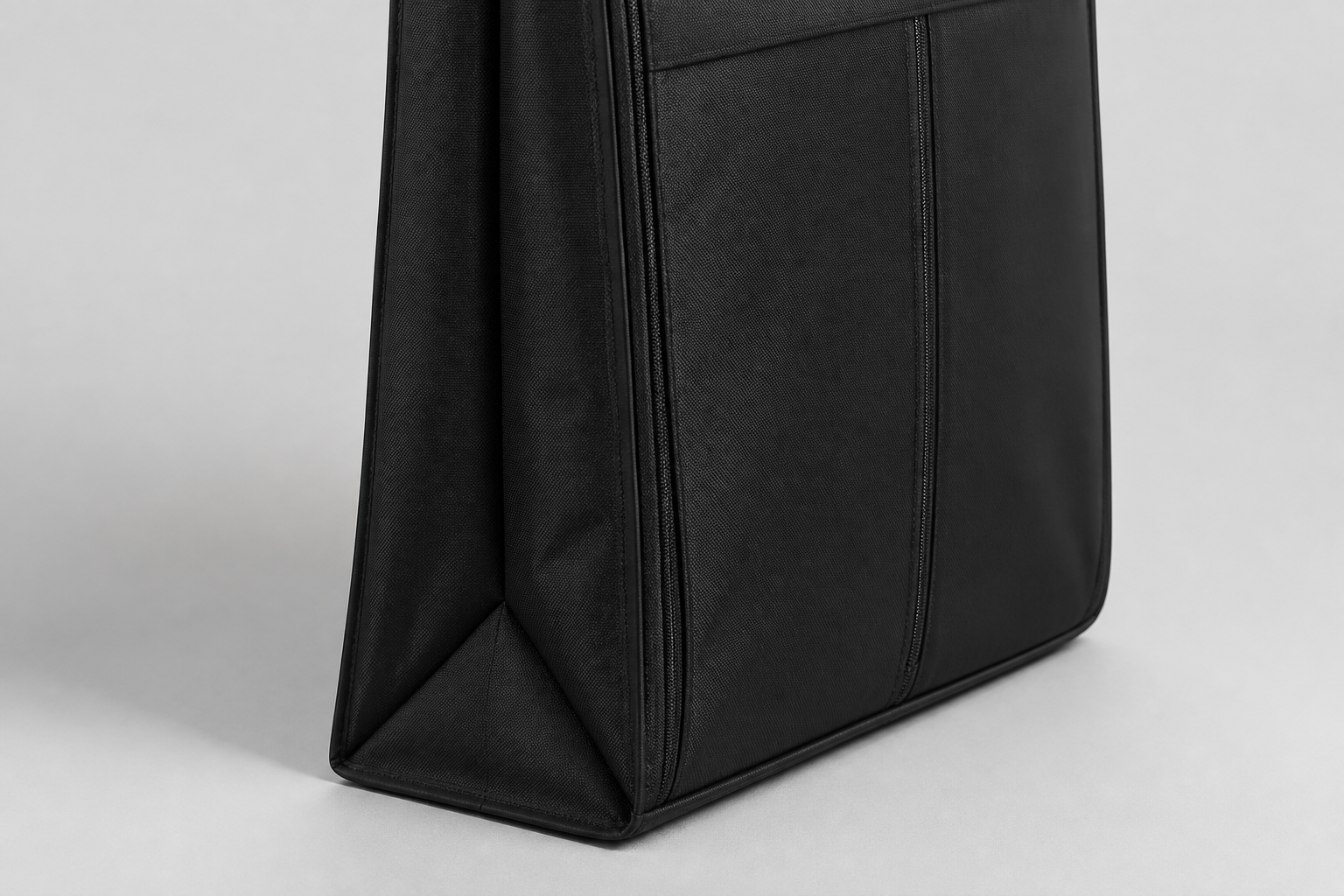
Now look at a gusseted bag. The side panels are folded accordion-style. When you put something inside, the folds open out and the bag gains depth — usually 8 to 12 cm at the base.
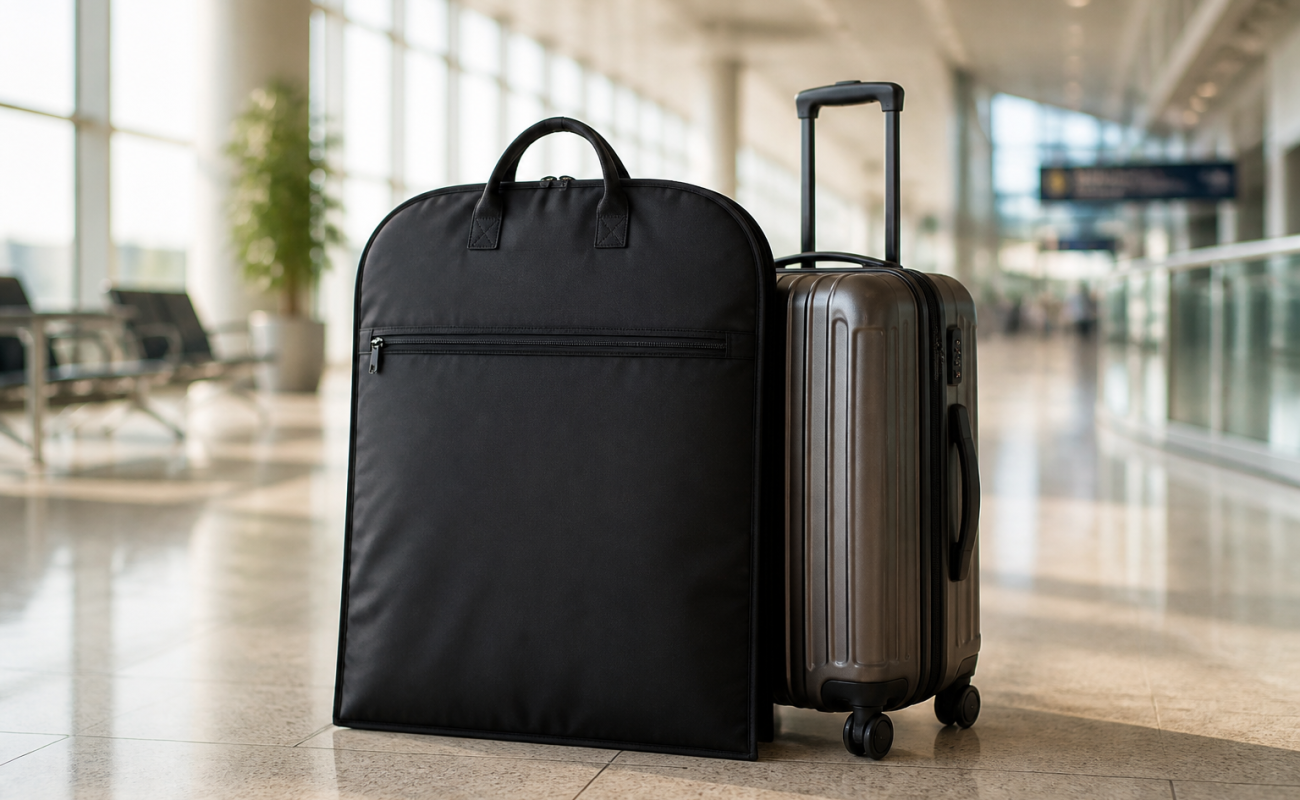
That base is the whole point. It turns a limp sack into something with structure. The bag stands on its own, holds its shape, and keeps the bottom of the garment off the floor of a car boot.
Think of the difference between a letter envelope and a cardboard box. Same idea, just fabric.
What can you fit in a gusseted bag?
More than you’d expect.
A 110 cm gusseted bag takes two to three suits on hangers, comfortably. The 10 cm base gives the shoulder area room, so the jackets don’t crush each other.
The bottom compartment adds more. Our standard design includes a 20 cm base section with a zip. In there: a pair of shoes, a belt, two ties, and a folded shirt. That’s a full outfit in one bag.
For tradeshows, that’s gold. You walk in carrying one bag instead of three. The suits come out looking like they were never folded — because they weren’t.
Standing vs hanging: where the gusset earns its keep
A flat bag has one position: hanging. If there’s no rail, it drapes over your arm or lies on the floor, and the suit takes the weight.
A gusseted bag stands. On the floor of a hotel room, upright in a car boot, propped in the corner of a meeting room. The structure keeps the garment off the ground, and the bag keeps its shape.
We’ve seen buyers use them for everything. Car trips where the suit rides shotgun. Train journeys where the bag leans against the luggage rack. One customer ships display suits to tradeshows in gusseted bags instead of boxes — saves packing time, and the suits arrive ready to hang.
Travel: gusseted vs flat
For one suit on a short trip, a flat bag is lighter and folds to almost nothing. It slides onto the rail in a hotel wardrobe without fuss.
For anything more, the gusset wins. Two suits, shoes, a day’s changes — the gusseted bag carries it all standing up, and you carry it like a briefcase.
Weight difference is smaller than people think. A 110 cm gusseted bag in 60 gsm non-woven runs about 350–400 g. A flat bag, same material, about 250–300 g. A hundred grams either way won’t break your arm.
The real question is what you carry. One suit, one night, a rail available? Flat bag wins. Two suits, shoes, two days on the road? Gusseted, no contest.
Folded, a 110 cm gusseted bag runs about 55 cm long — it fits crossways in most overhead bins. Checked, it protects what a suitcase crushes. Airlines and chauffeur services buy these for the structure, plain and simple.
Sizes and specs we make
| Length | Gusset depth | Best for |
|---|---|---|
| 100 cm | 8 cm | Blazers, short trips |
| 110 cm | 10 cm | Most suits, 2–3 pieces |
| 120 cm | 10 cm | Larger cuts, heavier wool |
| 140 cm | 12 cm | Long coats, evening wear |
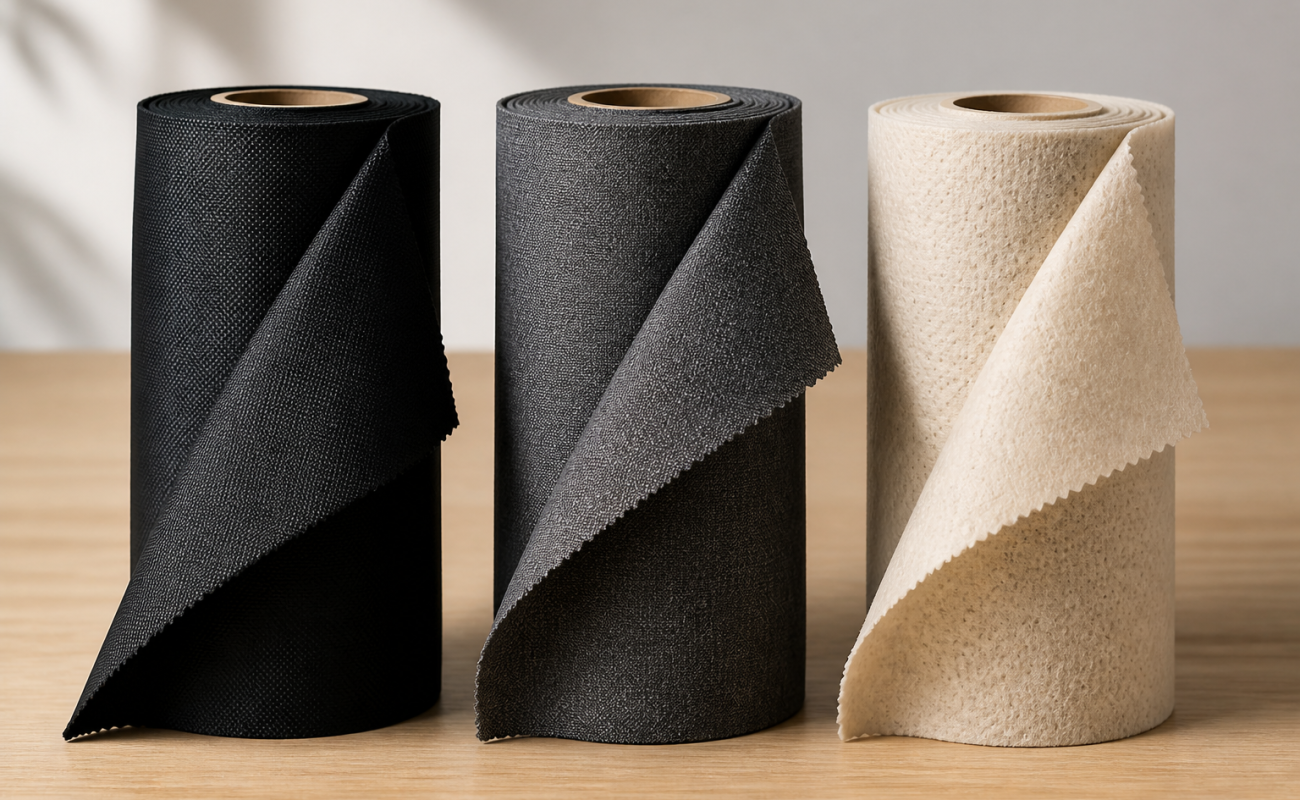
Materials run from 60 gsm non-woven up to 100 gsm, in RPET or virgin polypropylene. PEVA versions work where you need to see the garment — that’s more of a suit covers job. Zips, pockets, carry handles, and PEVA windows are all add-ons.
Standard MOQ is 500 pieces for non-woven, 1,000 for PEVA. Samples ship in 7 days. Production runs 20–30 days once the order is confirmed.
How a gusset gets built
A gusseted bag is more work than a flat one, and the work shows in the seams.
The side panels are cut as one folded piece, then sewn in with nylon thread, double-stitched on the main seams. The base corners take the most stress — every time the bag stands, they pull. We reinforce them with a second stitch line, and on heavier orders, a corner patch.
The carry handle is 2.5 cm webbing, bar-tacked at both ends. Bar-tacking is the lock-stitch cluster that stops a handle ripping out under a 5 kg load. Cheap bags skip it. We don’t.
The bottom compartment zip is a #5 nylon zip — about $0.15–$0.20 more than a plain bottom, and it’s the feature buyers thank us for later. Add a 15 x 15 cm PEVA window if the bag needs to show its contents.
Every design change runs through sampling first. 7 days for the sample, 20–30 days for production, MOQ 500 in non-woven.
When a flat bag is the better call
Not every order needs a gusset.
Dry cleaners hang suits on rails; the bag just keeps dust off. A flat bag does that at a lower cost. Stores covering back stock don’t need the structure either. Hotel wardrobe use? Flat is fine.
Dry cleaners are our biggest flat-bag buyers. They order 5,000 at a time, no print, 100 gsm so the bags survive a dozen trips through the wash-and-fold cycle. If that’s your business, a gusset is money spent on nothing.
Price is the honest decider. A 110 cm flat bag in 60 gsm runs roughly $0.55–$0.70. The gusseted version, same material, $0.75–$0.95. That’s 15 to 30 percent more per piece, and the gap grows when you add zips and compartments.
If your product is a budget garment bag, keep it flat. If your buyer expects structure — travel brands, corporate gifts, upscale lines — the gusset pays for itself.
Do you need one?
Walk through your buyer’s day, not the spec sheet.
Where does the bag actually live? Warehouse rail, dust off, budget matters — flat bag. Car boot, hotel room, shoes and a second suit in the same bag — gusseted. Tradeshow stand or shop floor, where the bag is part of the presentation — gusseted, and worth the extra.
Nine times out of ten, the customer who asks about the gusset knows the answer before they ask. They just want confirmation that the extra cost buys something real. It does: structure, space, and a suit that arrives flat.
We make both, in any quantity, from our standard suit bags line — printed, hot stamped, or embroidered with your logo. Send us your spec for a quote. Tell us what the bag carries and where it travels, and we’ll point you at the right design, not the expensive one.