

RPET and Recyclable Garment Bags: The Eco Option Explained
Every month, a buyer asks us for “something eco”. Recycled, recyclable, biodegradable — the words get used loosely. This is what they actually mean, and what they cost.
Where RPET actually comes from
RPET is recycled PET. Your garment bag starts life as a water bottle.
Here’s the chain: bottles get collected, washed, chopped into flakes, melted into pellets, spun into filament, and needled into non-woven fabric. A standard 110 cm garment bag in 60 gsm uses roughly 45–55 g of fabric. A single 500 ml bottle gives you about 12–15 g of PET. So one bag is roughly three to four bottles.
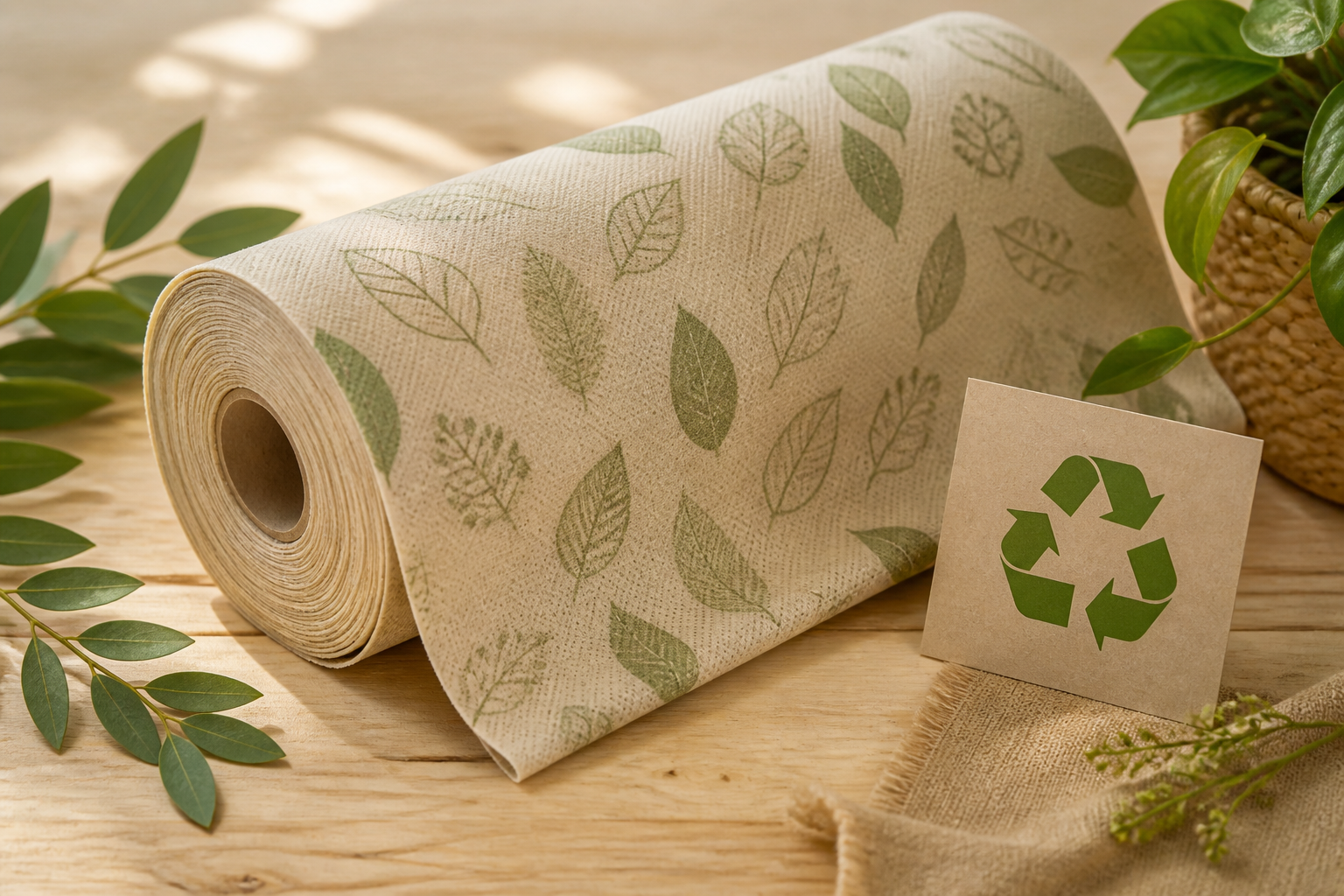
The fabric looks almost identical to virgin polypropylene non-woven. Slightly stiffer at first, and it softens with handling. Color take-up is good, which matters when you print on it.
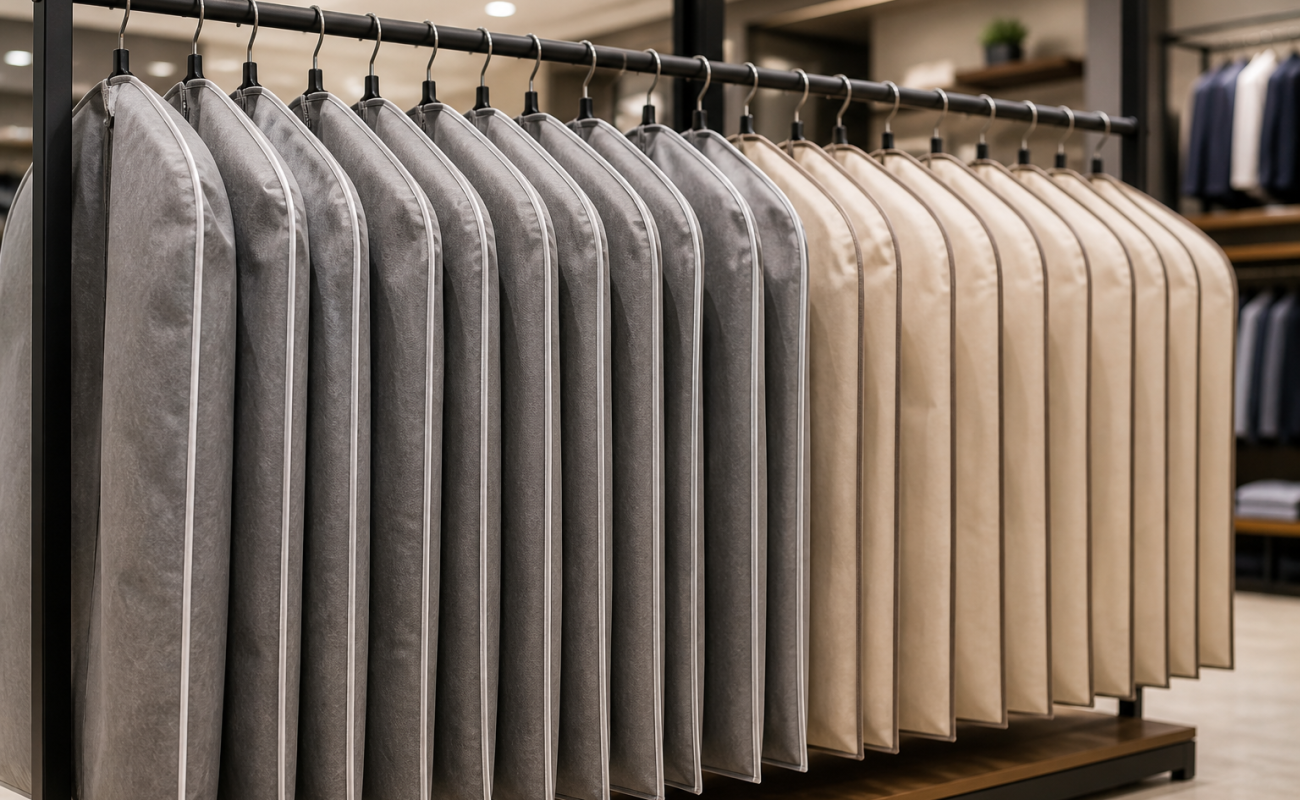
We run RPET from 60 gsm up to 100 gsm, in custom suit bags and covers alike. For most uses, nobody can tell the difference by touch. The difference shows in the paperwork.
GRS: what the certificate really covers
GRS is the Global Recycled Standard. It’s a chain-of-custody certificate. Every stage — the bottle recycler, the yarn spinner, the fabric mill, the bag factory — has to be audited.
What it proves: the product contains a verified amount of recycled material, and the factories along the chain meet environmental and social standards.
Two numbers matter. The recycled content, usually 90–100 percent for RPET non-woven. And the certificate itself — it must cover the whole chain, not just one mill. If a supplier says “we can do recycled” but can’t show a GRS cert that runs back to the raw material, treat that claim with care.
Audits run annually, and every shipment carries a Transaction Certificate, or TC. The TC states the batch’s recycled content and links it to the fabric mill. Ask for it with your order. A factory that produces the TC without a pause is a factory that’s done this before.
Cost: GRS-certified RPET fabric runs roughly 10–20 percent above virgin non-woven. On a 60 gsm bag, that’s about $0.08–$0.15 per piece. Not nothing, but small next to your freight and print.
OEKO-TEX: a separate question
OEKO-TEX Standard 100 tests the finished product for harmful substances — hundreds of parameters, from formaldehyde to heavy metals to restricted dyes.
Two points buyers miss.
First, OEKO-TEX does not mean recycled. It means the product is safe to handle. You can have virgin plastic that passes OEKO-TEX and recycled fabric that doesn’t. Different certificates, different questions.
Second, garment bags sit in Class 2 or Class 4 — indirect skin contact at most. Certification there is easier and cheaper than for baby clothes. We hold OEKO-TEX on our main non-woven lines, and it’s worth asking for if your brand sells to the EU, where retailers expect the paperwork.
What to put on the pack
The pack does part of the selling.
A line like “made from 100% recycled PET, GRS certified” on the front, a GRS logo if your certificate allows it, a hang tag from recycled paper. Water-based ink for the print — solvent ink on a recycled claim undercuts the story.
Keep claims provable. If you print “biodegradable,” you need the test report behind it. If you print a bottle count, make sure it matches the fabric weight. A 60 gsm 110 cm bag at 45–55 g of fabric is three to four bottles. Say “made from 3 recycled bottles” and a customer with a scale can check you. We do the math on every quote, so the number on your pack is the number on the factory floor.
“Biodegradable” non-woven: read the fine print
This is where marketing outruns science.
Biodegradable polypropylene exists. Additives in the resin help the fabric break down under the right conditions — heat, UV, moisture, microbial activity. Lab-test timeframes run one to five years.
In a landfill, where conditions are dry and dark, that timeline stretches. A lot. “Biodegradable” does not mean “composts in your garden bin.”
And oxo-degradable plastic — the older generation of this stuff — is banned in the EU for many products under the single-use plastics directive. If a supplier offers “oxo” anything, run the other way.
What actually composts is different material entirely: PLA or PBAT blends, or paper. Those cost more and behave differently in storage and shipping. For most garment bags, RPET is the pragmatic choice. It’s genuinely recycled, genuinely recyclable, and the price stays sane.
The price gap, side by side
| Material (110 cm bag, 60 gsm) | Price vs virgin PP | Notes |
|---|---|---|
| Virgin PP non-woven | Baseline ($0.55–$0.70) | The workhorse |
| RPET non-woven, GRS | +10–20% | Looks and handles near-identical |
| Biodegradable PP | +15–25% | Claims need scrutiny |
| PEVA, transparent | +5–15% | For windows and see-through covers |
| Paper / PLA composites | +40–80% | Niche, higher MOQ |
Those are rough ranges for plain bags without print. Your logo costs the same regardless of material, so the percentage gap shrinks as you add features.
Three checks before you order
A quick way to test a supplier’s green story.
One, ask for the GRS scope certificate and the TC for the fabric batch. Hesitation is an answer.
Two, ask for the OEKO-TEX certificate number and look it up in the public database. Real certificates are listed; invented ones are not.
Three, request a gsm sample. Weigh one square meter of the fabric — 60 gsm should read within 3–4 grams. The claim starts with the material, and the material is measurable.
None of this takes long, and it filters out most of the marketing.
What we’d recommend for your market
EU buyers are ahead on this. The Packaging and Packaging Waste Regulation pushes recycled content in packaging and makes recyclability a hard requirement from 2030. Garment bags sold as packaging — which covers most of what stores and dry cleaners buy — fall under that pressure. RPET with GRS is the answer that holds up when the questions get formal.
US buyers feel less regulatory heat but more consumer pressure. A GRS mark on the pack, a printed “made from recycled bottles” claim, a hang tag that tells the story — those sell.
One honest note for both markets: recycled content claims need the certificate behind them. Greenwashing hurts worse than plastic. We’ve had buyers burned by pretty packaging and no paperwork, and they remember it.
The practical path: switch the base material to RPET, keep the print simple, spend the savings on the certificate. That gets you 90 percent of the environmental story at 10–20 percent of the price.
On a 10,000-piece order, that premium is about $1,000 — frequently less than the freight difference between two quotes. For EU-bound orders, we now treat RPET as the default material, not the upgrade.
If you want to compare RPET, PEVA, and biodegradable options for your product line, our suit covers page shows the range — and our customization page is where we work through the options with you, material, certificate, and price in one quote.